


Vitamin D is an essential nutrient that plays an important role in maintaining healthy bones and muscles. It helps the body absorb calcium and phosphorus, two minerals that are essential for bone health. Vitamin D also contributes to normal muscle and immune function.
Vitamin D deficiency can develop when the body does not receive, absorb or properly use enough vitamin D. One challenge is that vitamin D deficiency symptoms are not always obvious. Some people may have low vitamin D levels without noticing any symptoms at all.
When symptoms do occur, they can sometimes be vague and may resemble those caused by other nutritional deficiencies or health conditions. Fatigue, bone discomfort and muscle weakness are among the symptoms associated with vitamin D deficiency.
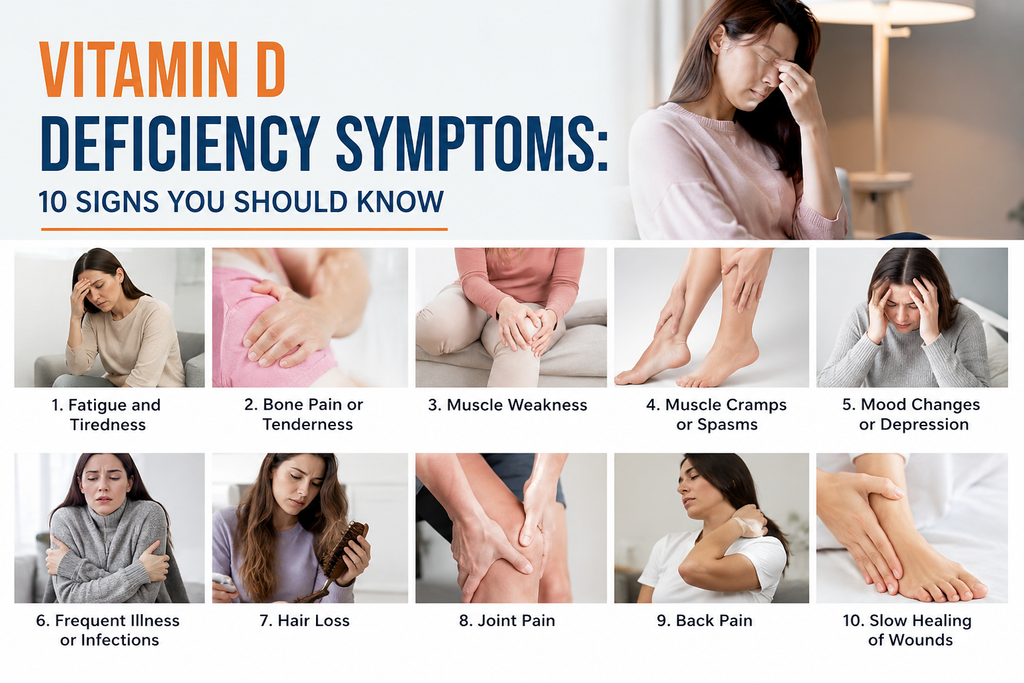
Here are 10 possible signs of vitamin D deficiency you should know.

1. Persistent Fatigue and Low Energy
Feeling unusually tired or having low energy can be one possible symptom of vitamin D deficiency.
Vitamin D deficiency does not always cause noticeable symptoms, but fatigue is one of the nonspecific symptoms reported in people with low vitamin D levels.
However, fatigue can have many different causes, including poor sleep, anemia, stress, nutritional deficiencies and underlying medical conditions. Therefore, tiredness alone does not mean that you have vitamin D deficiency.
If unexplained fatigue continues for a prolonged period, discussing it with a healthcare professional may help identify the underlying cause.
2. Bone Pain or Bone Discomfort
Vitamin D is particularly important for maintaining healthy bones because it helps the body absorb calcium.
When vitamin D deficiency becomes significant or persists for a long time, it can contribute to osteomalacia in adults, a condition in which bones become softer and weaker.
Bone pain related to osteomalacia may affect areas such as the back, pelvis, ribs or legs.
Persistent or unexplained bone pain should therefore not be ignored.
3. Muscle Weakness
Muscle weakness is another recognized sign associated with significant vitamin D deficiency.
People experiencing muscle weakness may notice that ordinary physical activities feel more difficult than before.
Vitamin D deficiency can affect both bones and muscles, and the National Institutes of Health notes that osteomalacia caused by vitamin D deficiency can result in bone pain and muscle weakness.
Because muscle weakness has many possible causes, proper medical evaluation is important if it persists.
4. Muscle Aches or Soreness
Unexplained muscle aches can also occur in people with vitamin D deficiency.
Some people may experience generalized muscle discomfort rather than pain in one specific location.
Muscle weakness, aches and cramps are among the possible symptoms associated with vitamin D deficiency.
Occasional muscle soreness after exercise is normal, but recurring or unexplained muscle discomfort may require further evaluation.
5. Muscle Cramps, Twitching or Spasms
Frequent muscle cramps or twitching may be another possible warning sign, particularly when vitamin D deficiency is severe enough to affect calcium balance.
Vitamin D helps the body absorb calcium, which is important for normal muscle and nerve function.
The NHS lists muscle tingling, cramping and twitching among symptoms that can occur with osteomalacia or rickets.
These symptoms can also result from several other conditions or electrolyte imbalances, so they should not be used to diagnose vitamin D deficiency on their own.
6. Difficulty Climbing Stairs or Getting Up From a Chair
Muscle weakness caused by significant vitamin D deficiency symptoms may become more noticeable during everyday activities.
For example, a person may find it harder than usual to:
- Climb stairs
- Stand up from a chair
- Walk for longer periods
- Perform routine physical activities
The NHS specifically identifies difficulty climbing stairs or getting out of a chair due to muscle weakness as a possible symptom of osteomalacia.
If this type of weakness develops unexpectedly or becomes progressively worse, medical assessment is advisable.
7. Changes in Walking or Getting Tired Easily While Walking
Severe or prolonged vitamin D deficiency symptoms
can affect bones and muscles enough to influence mobility.
A person may notice changes in the way they walk, experience weakness during walking or become tired more easily during activities that were previously comfortable.
Changes in walking patterns and increased tiredness while walking can occur with osteomalacia.
Because balance or walking difficulties can also have neurological, muscular and orthopedic causes, professional evaluation is important.
8. Frequent Falls or Reduced Physical Stability
Muscle weakness and bone problems related to severe vitamin D deficiency may contribute to reduced physical stability in some individuals.
People with osteomalacia may experience more frequent falls, especially when muscle weakness affects the legs and overall mobility.
Frequent falls should always be taken seriously because they can increase the risk of injury and may have many possible causes beyond vitamin D deficiency.
9. Bones That Break More Easily
Long-term or severe vitamin D deficiency symptoms can weaken bones.
In adults, vitamin D deficiency can lead to osteomalacia. Weaker bones can be more susceptible to fractures, sometimes following relatively minor injuries.
Bone fractures are not usually an early symptom of mild vitamin D deficiency, but they can be an important consequence of significant or prolonged deficiency.
Maintaining adequate vitamin D and calcium is an important part of supporting normal bone health.
10. Mood Changes
Some people with vitamin D deficiency may experience changes in mood.
Low mood or depressive symptoms have been reported among the possible nonspecific symptoms associated with vitamin D deficiency. However, mood changes have many possible biological, psychological and environmental causes and should not automatically be attributed to vitamin D levels.
Anyone experiencing persistent or significant mood changes should discuss them with an appropriate healthcare professional.
What Causes Vitamin D Deficiency symptoms?
Vitamin D deficiency can occur for several reasons.
Common factors include:
Limited Sunlight Exposure
The human body can produce vitamin D when skin is exposed to sunlight. People who spend very little time outdoors or consistently have limited skin exposure to sunlight may be at greater risk of low vitamin D.
Low Dietary Intake
Only a limited number of foods naturally contain substantial amounts of vitamin D. People who do not consume vitamin-D-containing or fortified foods may have lower intake.
Darker Skin
Melanin reduces the skin’s ability to produce vitamin D from sunlight. People with darker skin may therefore be at greater risk of vitamin D deficiency, particularly when other risk factors are present.
Older Age
As people age, the skin becomes less efficient at producing vitamin D from sunlight.
Digestive Conditions
Conditions that interfere with fat absorption can also affect vitamin D absorption because vitamin D is fat-soluble.
Examples include:
- Celiac disease
- Crohn’s disease
- Ulcerative colitis
- Certain other malabsorption disorders
Obesity or Previous Gastric Bypass Surgery
People with obesity or those who have undergone gastric bypass surgery may have an increased risk of inadequate vitamin D status.
Who Is at Higher Risk of Vitamin D Deficiency?
Although anyone can develop vitamin D deficiency, certain groups may be at higher risk, including:
- Older adults
- People with limited sunlight exposure
- People with darker skin
- People who cover most of their skin when outdoors
- People with digestive disorders that reduce nutrient absorption
- People with obesity
- People who have undergone gastric bypass surgery
- People whose diets contain little vitamin D
- Breastfed infants without appropriate vitamin D supplementation
Risk does not automatically mean deficiency. A healthcare professional can determine whether testing is appropriate based on individual circumstances.
Frequently Asked Questions
Q1. What are the most common vitamin D deficiency symptoms?
A. Possible symptoms include fatigue, bone pain, muscle weakness, muscle aches and muscle cramps, although some people have no symptoms.
Q2. Can vitamin D deficiency cause tiredness?
A. Yes, fatigue can occur with vitamin D deficiency, but many other medical and lifestyle factors can also cause persistent tiredness.
Q3. How do I know if my vitamin D is low?
A. Symptoms cannot confirm deficiency; a healthcare professional can use a blood test measuring 25-hydroxyvitamin D to assess vitamin D status.
Q4. What foods are good sources of vitamin D?
A. Fatty fish, egg yolks, some mushrooms and vitamin-D-fortified foods such as milk, yogurt or cereals can provide vitamin D.
Q5. Should I take vitamin D supplements if I have symptoms?
A. Do not rely on symptoms alone; discuss testing and the appropriate supplement dose with a qualified healthcare professional.
Medical Disclaimer
This article is provided for educational and informational purposes only and is not intended to diagnose, treat, cure or prevent any disease or replace professional medical advice. If you have symptoms, health concerns or questions about vitamin D supplementation, consult a qualified healthcare professional.
Medical References
Information in this article has been medically cross-checked against guidance from the National Institutes of Health Office of Dietary Supplements, the NHS and Cleveland Clinic.


